Skip to content
REANIMATEECPR · MONTRÉAL Lawrence Leroux’s work
A shared effort. A chance to bring more people home.

Bringing resuscitation
closer to the patient.

REANIMATE studies how a mobile team can bring extracorporeal cardiopulmonary resuscitation to people in cardiac arrest, before they reach the hospital.

Can we restore circulation sooner, reach more people in time, and improve survival with good neurological function?

REANIMATE ECPR Montréal emblem, with Montréal landmarks and an ambulance, encircled by a bagel
Hôpital du Sacré-Cœur de MontréalWith prehospital, hospital, and research teamsMontréal–Laval, Québec
The question behind the program

The distance to care
can become a barrier to care.

For selected patients whose circulation does not recover with conventional resuscitation, ECPR uses a pump and oxygenator to restore blood flow. Getting that support started takes a coordinated team, equipment, and time.

REANIMATE asks whether bringing the team to the scene can overcome some of the delays of extraction and transport. The program connects evidence synthesis and simulation with prospective feasibility studies, then a planned randomized evaluation of patient outcomes.

01 / The evidence

Each paper answers
a different part of the question.

What has been observed? What might work in Montréal? And how do we make the models reflect the realities of care?

01 / Evidence synthesisSystematic review & meta-analysis · 2025

What do we know about prehospital ECPR?

We synthesized adult out-of-hospital cardiac arrest studies reporting neurological outcomes after prehospital ECPR. Eight cohort studies involving 305 patients met the inclusion criteria.

How we studied it

Searches updated January 21, 2025; independent screening and extraction; random-effects meta-analysis and meta-regression. Registered as PROSPERO CRD42024538370.

Cohort studies
8
Patients
305
Pooled CPC 1–2 survival
25%
95% CI 17–35%

What the evidence supports

Across the cohorts, shorter low-flow times were associated with better neurological outcomes. Direct comparisons found about 30 minutes less low-flow time with prehospital ECPR (95% CI 16–44 minutes shorter).

The survival comparison remained uncertain: risk ratio 1.23, with a wide 95% confidence interval of 0.35–4.38. Only two studies informed that comparison. A randomized trial is needed to evaluate the delivery strategies.


Publication

Leroux L, Dennis-Benford NB, Bergeron A, Lamhaut L, Cournoyer A, Grunau B, Cavayas YA. Impact of prehospital extracorporeal cardiopulmonary resuscitation for out-of-hospital cardiac arrest on survival with good neurological function: a systematic review and meta-analysis. Resuscitation Plus, 24:100974.

02 / Delivery system designMonte Carlo simulation · 2025

How should ECPR be delivered?

We compared complete delivery strategies: the number of ECPR hospitals, where cannulation takes place, and where a mobile team is based. Six configurations combine two, three, or four hospitals, a rendezvous approach, and prehospital cannulation with hospital-based or optimally positioned teams.

A mobile team changes who can receive support in time.

Expanding from two to four hospitals increased flow recovery within 60 minutes from 69.2% to 75.1%. A hospital-based mobile team reached 99.7%; optimal mobile positioning reached 100% in the model.

The model combined Montréal EMS data from 2015–2019, a transport-time model trained on operational data, and 2,000 simulated years of cardiac arrests.

How many patients can regain circulation in time?

Modeled outcomes among ECPR-eligible patients in Montréal–Laval.

  1. 2 hospitals176 of 255 in time
    Flow within 60 min69.2%
    Survival with CPC 1–225.3%
  2. 3 hospitals190 of 255 in time
    Flow within 60 min74.4%
    Survival with CPC 1–227.6%
  3. 4 hospitals192 of 255 in time
    Flow within 60 min75.1%
    Survival with CPC 1–228.0%
  4. Rendezvous197 of 255 in time
    Flow within 60 min77.3%
    Survival with CPC 1–228.8%
  5. Mobile · hospital base254 of 255 in time
    Flow within 60 min99.7%
    Survival with CPC 1–239.5%
  6. Mobile · optimal base255 of 255 in time
    Flow within 60 min100.0%
    Survival with CPC 1–242.0%

What “in time” means. ROSC or ECMO initiation within 60 minutes of the EMS call. These percentages describe restored circulation, not team arrival alone.

How to read the figures. Means across 2,000 simulated years, averaging 255 eligible patients per year. Counts are rounded. The survival scale is 0–50%; the timing scale is 0–100%.

Tables 2–3 · ACLS-only modeled CPC 1–2 survival: 8.9%. All values are simulation estimates.

Earlier support, wider access

Among patients already reached in time by the two-hospital model, mobile strategies shortened mean low-flow time by 7.8 and 12.0 minutes. They also brought approximately 78–79 additional patients per simulated year into the 60-minute window.

Test the model against reality

A sensitivity analysis using 823 eligible historical cases estimated timely flow recovery at 41.8% with two hospitals, 99.5% with a hospital-based mobile team, and 100% with optimal positioning. These remain modeled outcomes; prospective studies will test actual delivery.

Publication

Leroux L, Grunau B, Lecuyer P, Dennis-Benford NB, Lamhaut L, Cheskes S, Cournoyer A, Cavayas YA. Optimizing extracorporeal cardiopulmonary resuscitation delivery for out-of-hospital cardiac arrest: a Monte Carlo simulation study. Resuscitation, 215:110743.

03 / From models to practiceLetter · August 28, 2026

What happens when a model meets the field?

Our recent letter examines how assumptions about dispatch, transport, scene access, cannulation, and team availability shape estimates of ECPR eligibility.

01

Model variability, not just average delays

Dispatch, scene access, transport, and cannulation times vary. A few additional minutes can move a patient outside the treatment window.

02

Separate eligibility from treatment

Retrospective registry information differs from what teams know on scene. Modeled candidates, real-time eligibility, and actual cannulations represent distinct populations.

03

Measure the whole activation pathway

The PRECARE experience cited in the letter recorded 298 dispatches, 123 confirmed arrests attended, and 12 ECPR procedures over 103 recruitment days. This illustrates the workload around each cannulation; these are PRECARE data, not REANIMATE results.

Publication

Cournoyer A, Cavayas A, Leroux L. Operational assumptions underlying extracorporeal resuscitation eligibility models. Scandinavian Journal of Trauma, Resuscitation and Emergency Medicine, 34:145.

02 / Protocols & funding

Two studies.
The protocols behind the program.

REANIMATE-0 and REANIMATE-1 are not yet completed. Here we present their research questions, protocols, planned sample sizes, and awarded funding. Study outcomes will be shared when available.

Adaptive pre-pilot

REANIMATE-0

Study protocol

Can we deliver ECPR in the field?

Establish the feasibility of a mobile team initiating extracorporeal support in Montréal–Laval. Each activation also helps the team understand the practical demands of dispatch, scene access, cannulation, and transport.

12–24

Planned participants · interim assessments at 12 and 18, maximum 24

Research grant awarded

Heart & Stroke

CAD$277,000
Design
Single-arm, adaptive feasibility study
Schedule & allocation
Pre-specified daytime activation blocks, 08:00–20:00, distributed across days and months.
Follow-up
Procedural outcomes and complications during the admission; survival and neurological function at hospital discharge.

How the study moves forward

A traffic light at each decision.

Start with 12 participants. Assess feasibility at 12 and 18, with a maximum of 24.

Go

Feasibility supported. Prepare the larger pilot.

Learn & continue

Review delivery and enroll six more participants.

Stop

Feasibility not established under this design.

12
participants
First assessment
Go
≥10 successes
Continue
6–9 successes
Stop
≤5 successes
18
participants
Second assessment
Go
≥14 overall, or ≥10 among the last 12
Continue
9–13 overall, unless the green rule is met
Stop
≤8 successes
24
participants
Final assessment
Go
≥18 overall, or ≥14 among the last 18
Stop
Neither green criterion is met

Final decision; no further expansion.

Success means establishing extracorporeal flow ≥3 L/min. The green rule combines ≥75% success with a two-sided 95% Wilson confidence-interval lower bound ≥50%. Analyses of the last 12 or 18 participants account for the first six as a learning period.

Randomized internal pilot

REANIMATE-1

Study protocol

Can we compare the two delivery systems?

Test the feasibility of a randomized trial comparing a prehospital ECPR system with standard care, including in-hospital ECPR. Measure whether the trial can recruit reliably, deliver the intervention, and collect the outcomes needed for a larger study.

76

Planned participants · 38 per arm

Research grant awarded

Canadian Institutes of Health Research

CAD$1,330,000
Design
Open-label, parallel-arm, internal feasibility pilot randomized-controlled trial
Schedule & allocation
Randomized 24-hour periods, stratified by day of the week and month. Enrollment is planned over 12 months.
Follow-up
Resuscitation and ECPR data during care; vital status, neurological function, and quality of life at 3 months.

How the study moves forward

A traffic light at each decision.

Five feasibility measures determine whether the internal pilot can progress to REANIMATE-2.

Go

All criteria are green: progress to the full trial.

Amend

Resolve amber criteria through workable amendments.

Stop

Any red criterion, or unresolved amber, prevents progression.

REANIMATE-1 planned progression thresholds
Feasibility measureGreen · GoAmber · AmendRed · Stop
Timely team arrivalWithin 45 minutes of the 911 callgreen≥75%amber50% to <75%red<50%
Successful ECPR initiationAmong attempted prehospital cannulationsgreen≥80%amber50% to <80%red<50%
Protocol adherenceRespect of ECPR initiation criteriagreen≥85%amber70% to <85%red<70%
EnrollmentParticipants per month, across both groupsgreen≥10amber6 to <10red<6
Outcome completenessNeurological survival outcome available at 3 monthsgreen≥85%amber70% to <85%red<70%

Amber criteria require a remediation plan from the Steering Committee, reviewed by the Data and Safety Monitoring Board. If no major protocol changes are needed, pilot participants’ clinical outcomes can contribute to the definitive trial.

The next research question · REANIMATE-2

Does the strategy improve patient outcomes?

The planned definitive trial would evaluate survival with favorable neurological function at 3 months, alongside quality of life, safety, and cost per quality-adjusted life-year. Its current design estimates 532 participants; that target would be reassessed using what the pilot learns.

03 / The pathway

One chain of care.
Many people making it possible.

The protocols follow the entire response, from the first call through recovery. REANIMATE-1 will compare this pathway across randomized prehospital and standard-care days.

  1. 01

    Recognize & activate

    Dispatchers screen the initial call. Standard first responders and paramedic teams provide resuscitation while an available mobile ECPR team is activated under the study plan.

  2. 02

    Assess at the scene

    Paramedics and physicians confirm eligibility, the response to ongoing resuscitation, scene access, and the time available. Enrollment and the decision to cannulate are recorded separately.

  3. 03

    Establish support

    For eligible patients, the mobile team attempts field ECPR while paramedics continue resuscitation. Procedural success, delays, and complications are documented.

  4. 04

    Continue hospital care

    After flow is established, the patient travels to the receiving ECPR center. Handover connects prehospital care with emergency, cardiology, perfusion, and intensive care teams.

  5. 05

    Follow recovery & learn

    Collect patient outcomes, review each activation, and use structured debriefs to understand barriers. Feed those observations back into training, workflow, and the next study.

Measure the whole response.

Activations, confirmed arrests, exclusions, enrollments, cannulation attempts, successful flow, and patient outcomes each need their own denominator. That makes the clinical results and the operational workload easier to understand.

04 / The people

A program built
by a team.

REANIMATE brings together clinical experience, prehospital operations, research methods, and the perspective of people affected by cardiac arrest.

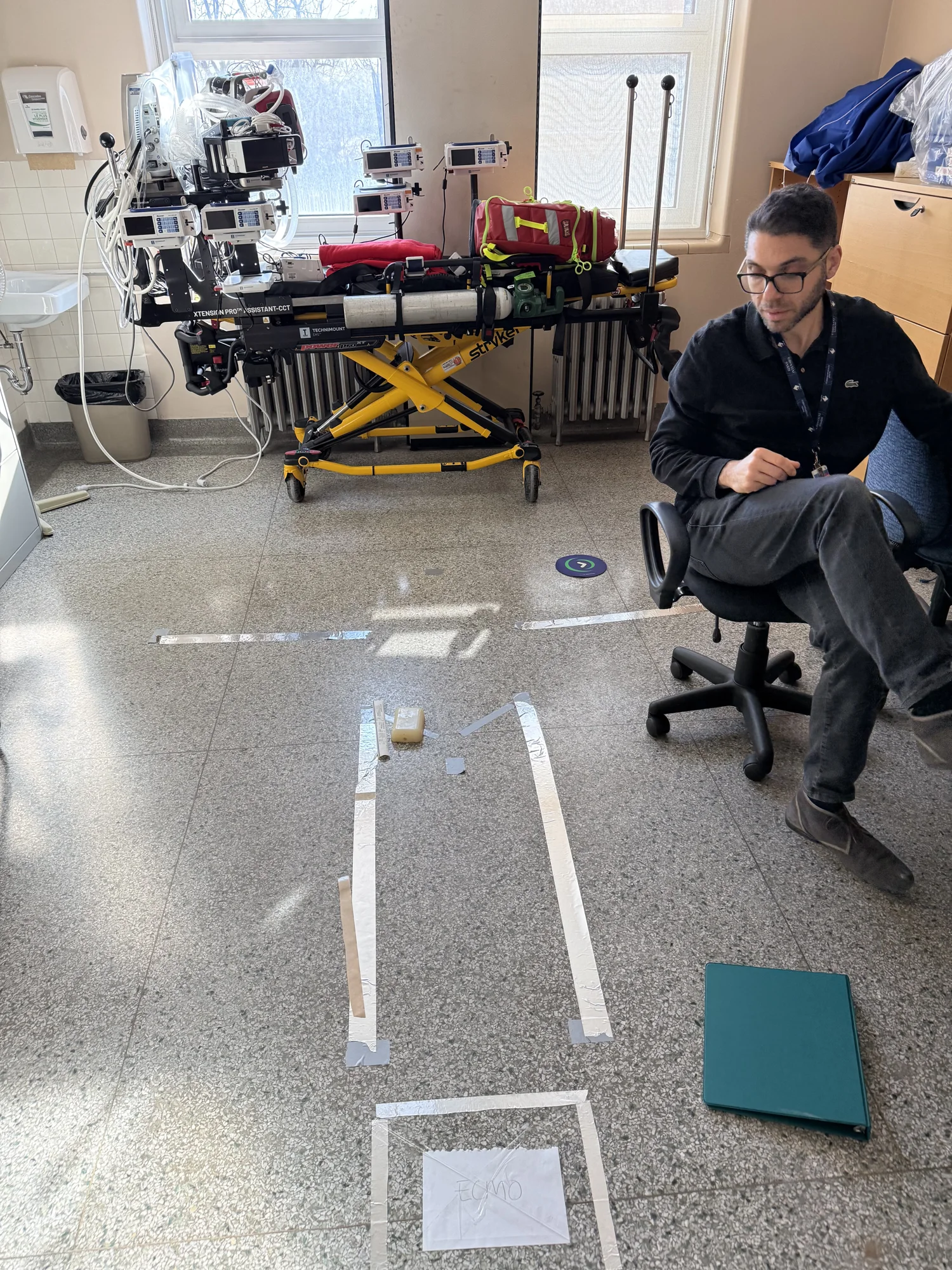
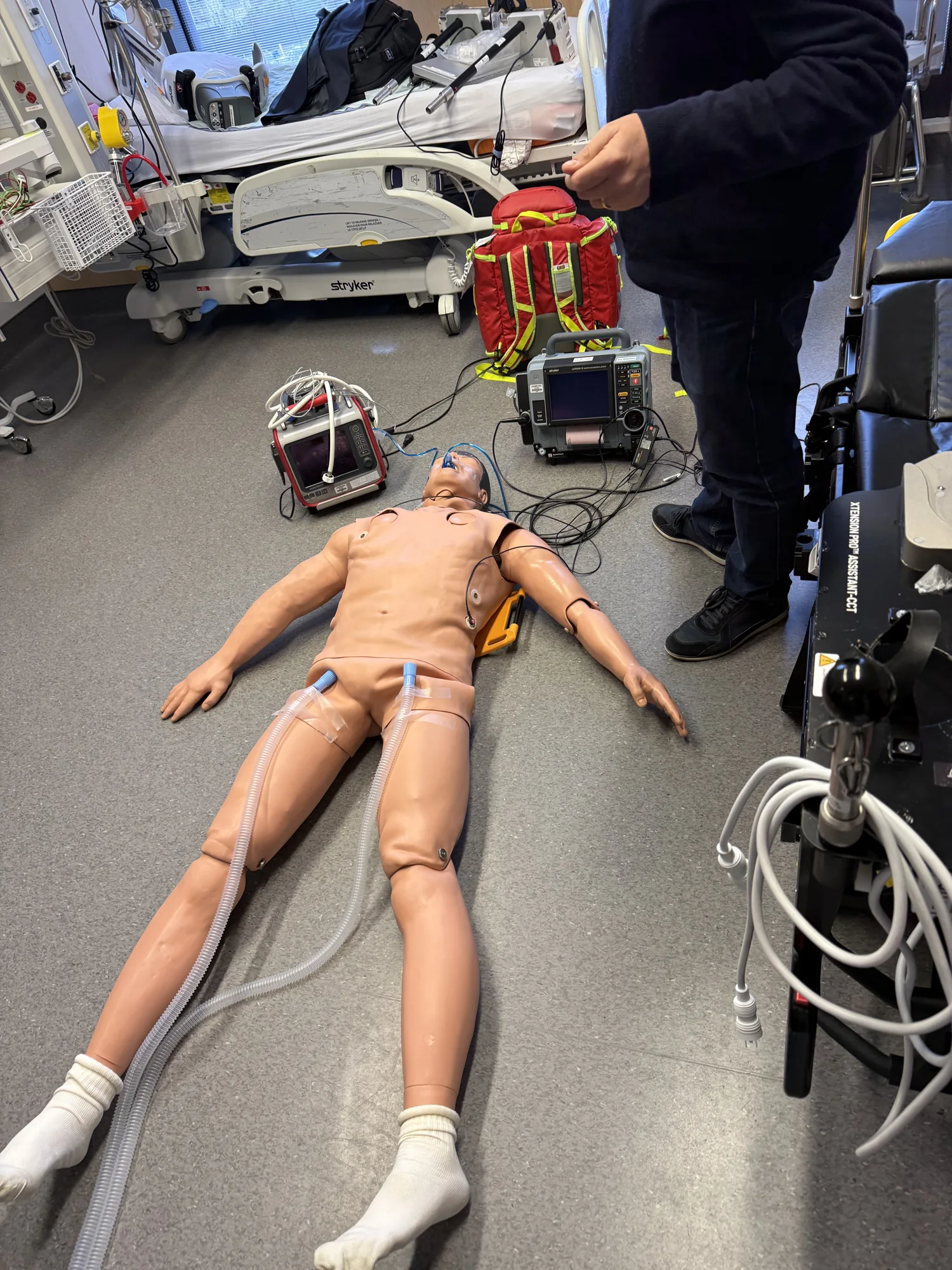
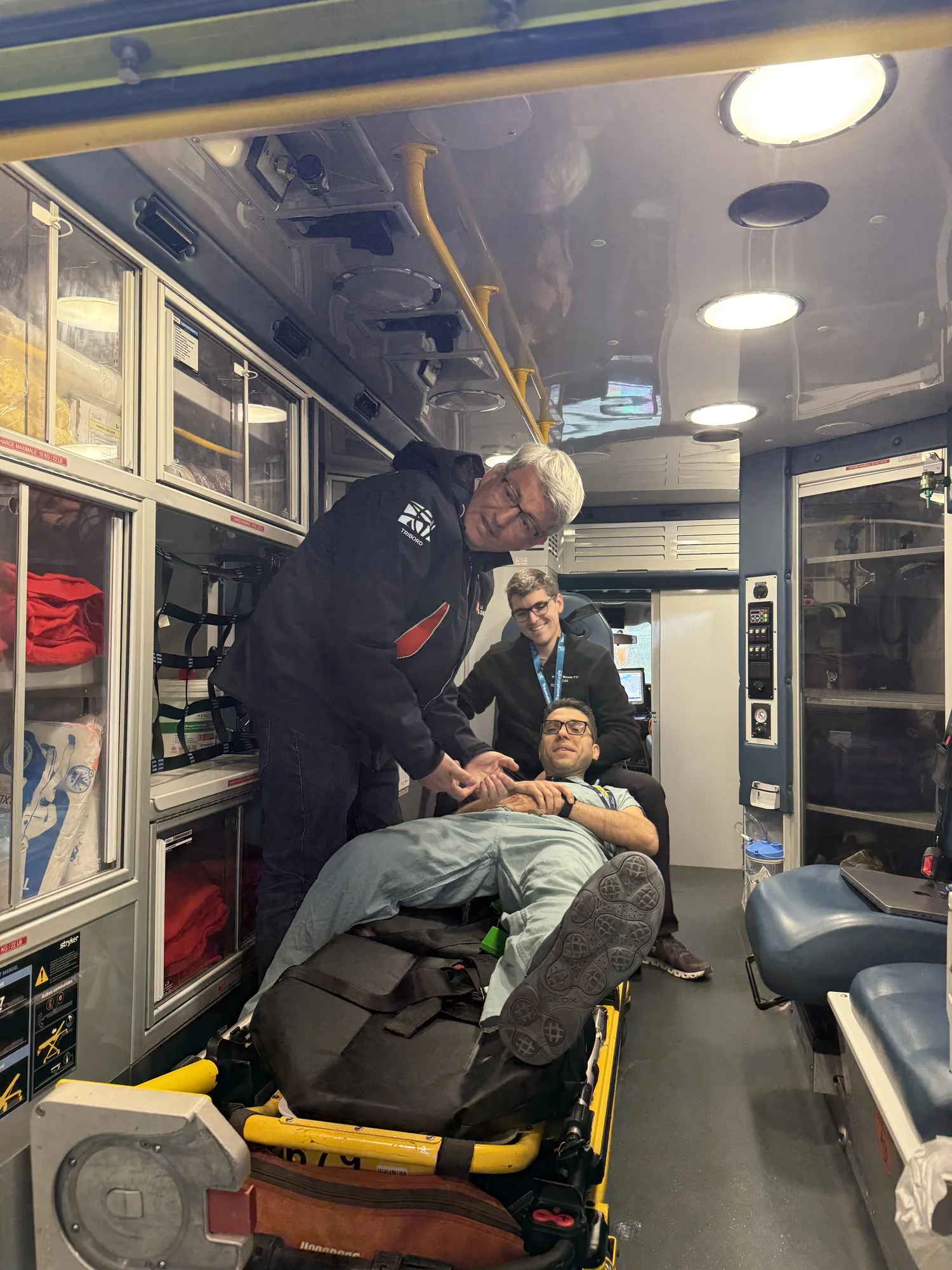
A colleague beside the equipped transport stretcher, with a taped equipment layout on the floorAn ECPR training mannequin with cannulation tubing, monitoring equipment, and a transport stretcher nearbyThree colleagues together inside an ambulance, one reclining on the stretcher
Principal investigator

Yiorgos Alexandros Cavayas

Critical care · Hôpital du Sacré-Cœur de Montréal. Trial leadership and the ECPR program.

Co-principal investigator

Lawrence Leroux

Anesthesiology · Hôpital du Sacré-Cœur de Montréal. Project coordination, resuscitation research, and the ECPR team.

Co-principal investigator

Alexis Cournoyer

Emergency medicine · Hôpital du Sacré-Cœur de Montréal and Urgences-santé. Prehospital resuscitation and trial design.

Co-principal investigator

Lionel Lamhaut

SAMU de Paris · Université Paris Cité. Prehospital ECPR expertise, team mentoring, and training.

Research & methods

Brian Grunau, Sheldon Cheskes, and Christian Vaillancourt contribute ECPR and prehospital research expertise. Jason Robert Guertin leads the economic evaluation; Mireille Schnitzer leads the statistical analysis.

Prehospital collaboration

Thérésa Choisi and Luc de Montigny contribute research and logistical expertise at Urgences-santé. Dispatchers, primary and advanced care paramedics, and first responders are central to the pathway.

Clinical delivery

The REANIMATE-0 physician team described in the protocol includes Alexandros Cavayas, Lawrence Leroux, Jean-Bernard Breau, Marc Belliveau, and Florin Costescu, working alongside perfusion, emergency, and intensive care colleagues.

Patient partnership

Nathaniel Dennis-Benford is named as the REANIMATE-1 patient partner. Patient and community perspectives help connect study design and outcomes to what matters beyond the resuscitation itself.

Participating organizations in the study plans

Hôpital du Sacré-Cœur de Montréal · Urgences-santé · McGill University Health Centre · Université de Montréal

05 / Build a program

Share what helps
the next team get started.

The goal of this hub is to make the work reusable: the reasoning behind the program, the way it operates, and the lessons learned along the way.

Evidence & study designs

The three publications, eligibility summaries, planned sample sizes, and study measures.

Explore now

Program materials

A future library of approved protocols, equipment lists, role cards, data definitions, and debrief templates.

Planned library

Training & simulation

Future videos and scenarios covering dispatch, scene coordination, cannulation practice, and the full response.

Planned series

Notes from the field

Future updates with team photographs, milestones, practical lessons, and changes made after simulation or deployment.

Updates to come
Research that others can build on

Better questions.
Shared experience. Better care.

For teams exploring prehospital ECPR, researchers working on delivery systems, or colleagues interested in sharing experience.

Connect about REANIMATE